Scottsdale, AZ 85260

CO2 laser resurfacing
for skin that needs
more than skincare.

Ablative carbon-dioxide laser at 10,600 nm. Removes damaged layers, rebuilds collagen from within. Performed personally by Dr. Natalya Borakowski, NMD.

Cost from
$625
Procedure
60 min
Downtime
2–10 days
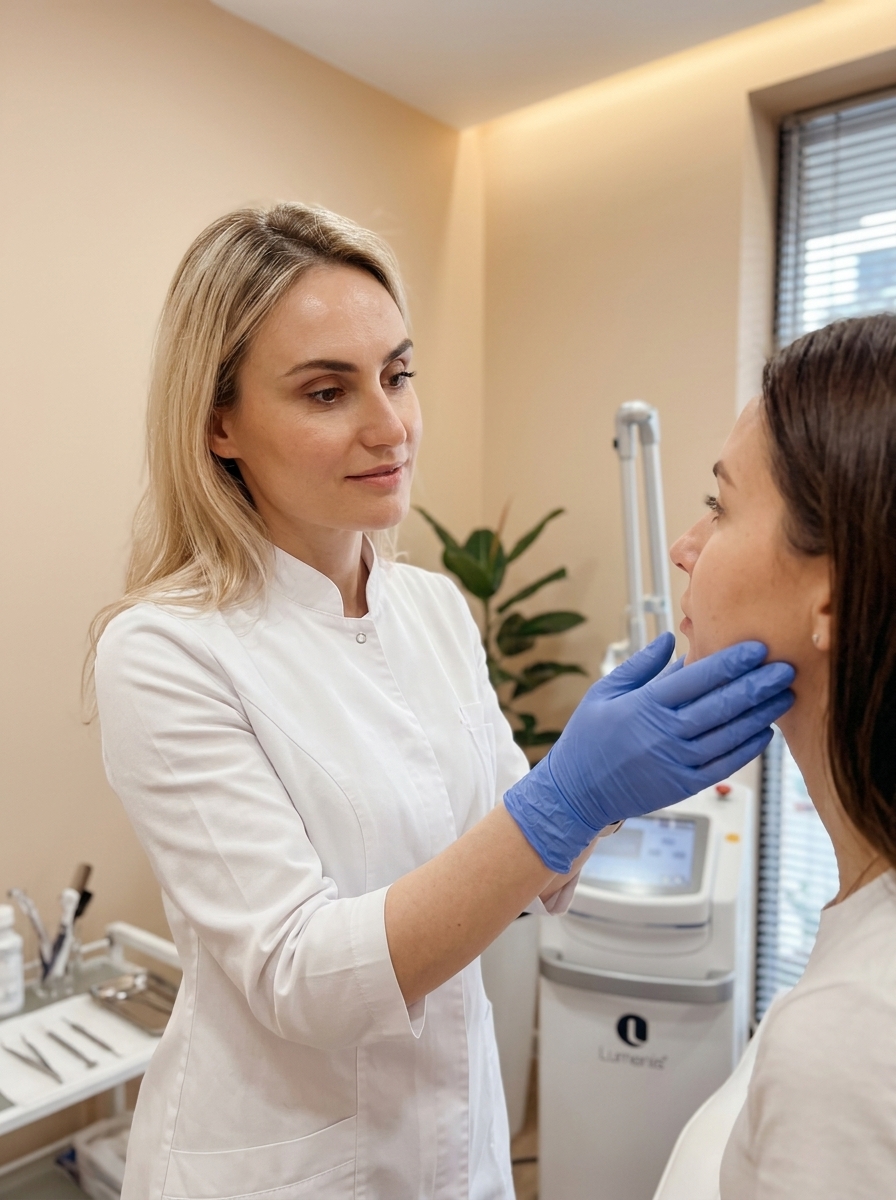
Dr. Natalya Borakowski performs a CO2 laser consultation at Desert Bloom Skincare in Scottsdale
NB
Dr. Natalya Borakowski, NMD 17 years · performs every CO2 procedure personally
Treats
Acne scars Age spots Crow's feet Droopy eyelid Eye bags Frown lines Large pores Nasolabial fold Ptosis Scars Sun spots Uneven texture Wrinkles
When skincare stops working

The most effective ablative tool we have — when used precisely.

CO2 laser resurfacing is one of the most effective ablative tools for wrinkles, acne scars, sun damage, and uneven texture. When topical skincare stops making a difference, CO2 removes the damaged layers and rebuilds collagen from within.

At Desert Bloom, Dr. Natalya Borakowski performs CO2 laser skin resurfacing with 17 years of experience — and she will always explain your options and set clear expectations before any treatment begins. CO2 is one of several laser treatments we offer, alongside erbium laser resurfacing, CoolPeel, Elluminate Glow, and photofacial.

At a glance

The essentials, before we dive in.

  • Ablative carbon dioxide laser at 10,600 nm
  • Treats wrinkles, acne scars, sun damage, uneven tone
  • Fractional mode: 5–10 day downtime · CoolPeel: 2–3 days
  • Full ablative not offered — facelift-adjacent, requires sedation
  • Results last 3–5 years with diligent sun protection
  • Suitable for Fitzpatrick I–III; alternatives recommended for IV–VI
What it is

How CO2 laser resurfacing actually works.

CO2 laser resurfacing is an ablative skin rejuvenation procedure that uses a carbon dioxide laser at 10,600 nm to vaporize damaged skin and stimulate collagen production. Each pulse removes 20–30 micrometers of tissue while creating a controlled thermal zone that triggers neocollagenesis.

The fractional delivery method targets columns of skin while leaving surrounding tissue intact — which is what makes recovery faster compared to older full-ablative techniques. CO2 can improve wrinkles, acne scars, age spots, and uneven skin tone in ways topical products cannot replicate. Melasma requires a more cautious plan because heat and inflammation can worsen pigment in some patients. Because it is a true ablative resurfacing procedure — not a gentler non-ablative treatment — expect real downtime and real results.

Why wavelength matters

The 10,600 nm wavelength is preferentially absorbed by water in the skin, allowing CO2 energy to vaporize water-rich tissue while creating a controlled zone of thermal effect. That is why settings and patient selection matter so much. This precision is the reason CO2 outperforms older resurfacing tools for deep wrinkles and scarring.

CO2 vs. non-ablative lasers

Non-ablative lasers — like fractional 1550 nm or long-pulsed 1064 nm — heat the dermis without removing the epidermal surface. They are gentler, with almost no downtime, but they also deliver less dramatic correction per session. Ablative CO2 removes the damaged epidermis outright, which is why the results are larger and last longer.

The tradeoff is real: more improvement, more recovery. For patients who want minimal downtime and are willing to do more sessions for incremental change, non-ablative options make sense. For patients who want one intensive appointment that delivers visible texture and tone improvement, CO2 is the better tool — provided their skin type allows it safely.

How it works

From consultation to the first 48 hours.

Five steps. Every one of them done with Dr. B in the room — no technicians, no surprises.

1

Consultation & assessment

Skin type is evaluated using the Fitzpatrick scale, medical history is reviewed, and any condition that might affect candidacy is flagged. If you have a history of cold sores, Dr. Borakowski prescribes antiviral prophylaxis — valacyclovir 500 mg twice daily for 10 days, starting the day of treatment. This is not optional. HSV reactivation on freshly ablated skin can cause scarring, so we prevent it.

2

Pre-treatment preparation

Avoid direct sun exposure for four weeks prior; tanned skin is not safe to treat. Stop retinoids 5–7 days before. If you have a history of isotretinoin (Accutane) use, a minimum 12-month washout is required. Do not wax, thread, or use hair removal creams in the area for two weeks. Arrive with clean skin, no makeup, no actives.

3

Numbing & setup

A topical anesthetic is applied 30–60 minutes before the procedure and left to absorb. Protective eye shields are placed. The treatment area is cleansed, degreased, and prepped. Numbing makes the procedure more tolerable, but you may still feel heat, pressure, and a strong sunburn-like sensation depending on treatment intensity.

4

Laser treatment

In fractional mode, the handpiece delivers laser energy in a grid pattern, vaporizing micro-columns of damaged tissue while leaving intact bridges of skin to speed healing. Fluence, density, pulse duration — every setting is adjusted to your skin type, your goals, and the condition being treated. A full face typically takes 30–60 minutes. Dr. Borakowski narrates each pass so you know what is happening.

5

Immediate post-care

Petrolatum ointment is applied immediately and continues for the first several days. The skin feels like a significant sunburn — heat, tightness, and redness are expected in the first hours. You go home with a detailed aftercare protocol, a printed recovery timeline, and a direct number to call if anything concerns you.

Why Dr. B does this herself

CO2 is a laser where technique matters. Settings that are appropriate for Fitzpatrick II may need to be reduced or adjusted for Fitzpatrick III, because pigment risk rises as baseline melanin increases. Dr. Borakowski performs every CO2 laser resurfacing procedure personally — not an aesthetician, not a technician.

What the first 48 hours actually feel like

In the first few hours after treatment the sensation is a strong, warm sunburn — uncomfortable but tolerable without oral pain medication. Swelling usually peaks between hours 12 and 48, especially around the eyes; sleeping with your head elevated on two pillows helps.

You will look in the mirror and think it looks worse than you expected — that is normal, and it is why every patient goes home with a printed day-by-day expectation sheet. The condition of the skin on day two is not the result. The result emerges over weeks.

Types of CO2

One technology. Three intensities. Not all of them belong at our clinic.

CO2 laser is a family of delivery modes — from superficial polishing to deep correction. At Desert Bloom we perform fractional CO2 and CoolPeel; full ablative is not offered.

Not offered

Full ablative CO2

Coverage100% surface
Downtime2–3 weeks
Best forSevere photoaging, post-facelift
SessionsOften 1
AnesthesiaSedation / nerve blocks
Offered

CoolPeel

CoverageSuperficial fractional
Downtime2–3 days
Best forFine lines, texture, pores, early photoaging
Sessions2–3
AnesthesiaTopical typically sufficient
At Desert Bloom we prefer multiple CoolPeel treatments over full ablative resurfacing. CoolPeel uses H-Pulse microsecond technology on the Rohrer Phoenix CO2 laser — powerful ablation with minimal thermal spread, fewer side effects, shorter downtime.

Fractional vs. full ablative

Fractional lasers fire in a grid of micro-columns, leaving bridges of intact tissue that re-epithelialize the treated areas in days rather than weeks. That is the single most important innovation that made ablative laser resurfacing safer for real-world patients.

CoolPeel vs. fractional: which is right for you?

CoolPeel uses extremely short microsecond pulses on the same Rohrer Phoenix CO2 platform we use for deeper work. Because the pulses are so brief, thermal damage to surrounding tissue is kept to a minimum — the laser vaporizes the surface without letting heat linger below. That is why CoolPeel downtime is 2–3 days instead of 5–10.

CoolPeel is excellent for fine lines, enlarged pores, early texture change, and maintenance between deeper sessions. It is not a substitute for fractional CO2 when treating significant acne scarring or deeper wrinkles — for those goals, a more intense single session of fractional CO2 typically delivers better value per appointment than a series of lighter treatments.

Recovery

Day by day. Predictable, but demanding.

What follows is the timeline most patients experience, assuming strict aftercare. Days three through seven look alarming — that is normal healing, not a complication.

Day 0

Hot, tight, red — like a bad sunburn

Swelling begins within hours.

Aftercare
Petrolatum ointment applied immediately, cool (not cold) compresses, rest with head elevated.
Days 1–3

Peak swelling. Bronze appearance.

Especially around the eyes. Serosanguinous (clear-pink) fluid weeping is expected.

Aftercare
Gentle saline rinses, petrolatum every 2–4 hours, zero sun, no bending over.
Days 3–7

Crusting, peeling, itching

Re-epithelialization completes by day 6–7. The skin may look alarming at this stage but is healing as expected.

Aftercare
Continue petrolatum wound care. Do NOT pick. Avoid sunscreen on raw skin until re-epithelialized.
Week 2

Manageable redness — back to light work

Pink/red but safe to cover with mineral makeup. Most people return to light office work.

Aftercare
Gentle cleanser + fragrance-free moisturizer; SPF 30+ daily; no actives yet.
Weeks 3–4

Pinkness fades. Tone improves visibly.

Cautious reintroduction of active skincare products.

Aftercare
Slow reintroduction of retinoids, vitamin C; continued daily SPF 30+.
Months 1–6

Collagen remodeling — final result emerges

Visible around month 3 and continues up to 12 months. Final results at 3–6 months.

Aftercare
SPF 30+ daily; ongoing sun protection; annual CoolPeel maintenance helps prolong results.

When to call us — days 3–7 look alarming but are normal healing.

Contact Desert Bloom at (480) 567-8180 if you experience:

  • Increasing pain after day 3 (not improving)
  • Yellow or green discharge, or foul odor (infection)
  • Worsening blisters or spreading redness
  • Fever above 101°F
  • Grouped vesicles anywhere in the treated areas (possible HSV reactivation)

Why you cannot rush this

Sun exposure during weeks 3–4 is the single most common cause of post-inflammatory hyperpigmentation after CO2. A $15 bottle of mineral SPF 30+ is the difference between a clean outcome and months of pigment correction.

CoolPeel recovery: Mild redness on day one, back to normal in 2–3 days. Fewer restrictions and a faster return to regular activity compared to fractional CO2.

Before & after

The numbers behind the results.

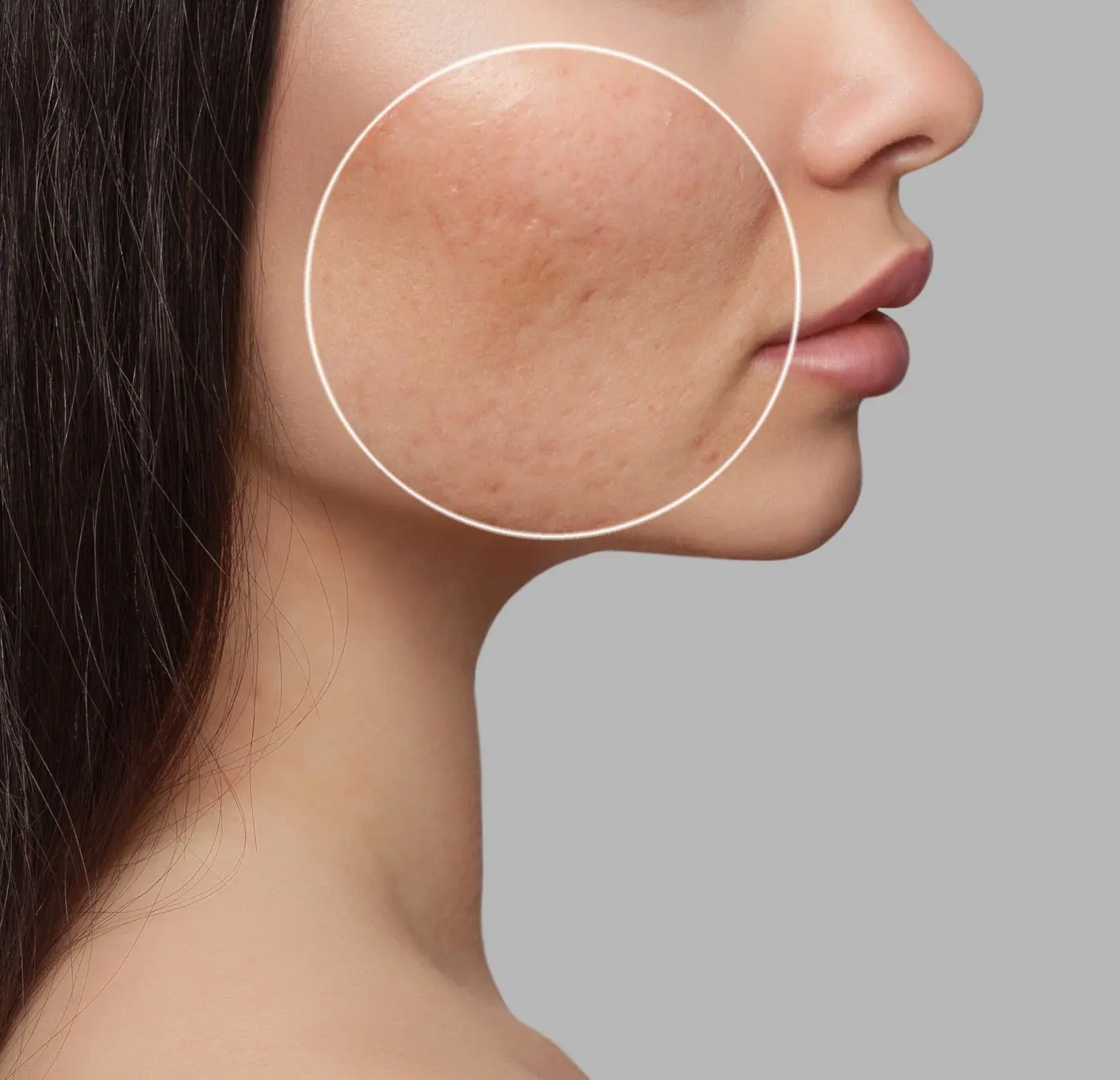
Fractional CO2 achieves 26–50% periorbital wrinkle improvement and 40–75% acne scar improvement in clinical studies. Results are generally visible by weeks 3–4 and continue improving for months as collagen remodels.

Before and after CO2 laser resurfacing treatment for acne scars

In one 60-patient study of moderate-to-severe atrophic acne scars, 43.3% of patients achieved more than 50% improvement after fractional CO2 treatment, with rolling and superficial boxcar scars responding best. The final appearance settles between months three and six. In practice, most of our patients notice the inflection point around week four when the pinkness fades and the new skin texture becomes obvious.

Results typically last 3–5 years with consistent sunscreen use and sun protection; annual CoolPeel sessions help prolong and maintain them.

What CO2 cannot do

CO2 is exceptional for texture, tone, wrinkles, and scarring. It will not lift volume loss, it will not replace filler in hollow areas, and it will not fix dynamic wrinkles caused by muscle movement. For those goals, we plan combination treatments.

Clinical evidence, in plain English

A 2025 expert consensus in Lasers in Surgery and Medicine reviewed the current standard of care: Fitzpatrick I is optimal (100% expert agreement), Fitzpatrick II is acceptable (76%), and the ideal candidate age is 40–60 (82%). For atrophic acne scars, fractional CO2 produces a 40–75% improvement on the ECCA scale, measured at three and six months post-treatment. Long-term follow-up data from Weinstein's 2,123-patient series shows that the side effect profile is predictable and the improvements durable, with most patients maintaining their gains at 2+ years.

Clinical data is one piece of the decision. The other is an honest candidacy conversation — which is what a consultation with Dr. Borakowski is designed to give you.
Candidacy

Who is — and who isn't — a candidate.

Per 2025 expert consensus, ideal candidates meet most of the green criteria. If any of the red criteria apply, CO2 is not the right tool for you — and we will tell you so.

Good candidate

  • Fitzpatrick skin types I–III (fair to medium-fair complexion)
  • Moderate-to-severe wrinkles, acne scars, sun damage, or uneven texture
  • Age 40–60 (82% expert consensus on optimal age range)
  • Non-smoker or willing to stop before and after treatment
  • No active skin infections or open wounds in the treated area
  • Willing to commit to sun protection, SPF 30+, and full aftercare protocol
  • Not currently pregnant or breastfeeding
  • No isotretinoin (Accutane) use within the past 12 months

Not appropriate

  • Active herpes simplex (HSV) lesions in the treated area
  • Active bacterial or fungal infection, or open wounds
  • Active acne with open lesions
  • Pregnancy or breastfeeding
  • Vitiligo or psoriasis in the treated area (Koebner risk)
  • Fitzpatrick IV–VI skin type — elevated pigment risk; we do not perform CO2 on IV–VI
  • Keloid or hypertrophic scarring history
  • Immunosuppression or collagen vascular disease
  • Isotretinoin use within the past 12 months

If CO2 is not the right fit, alternatives include erbium laser resurfacing (gentler, safer for darker skin tones), RF microneedling (safe across all Fitzpatrick types), or custom chemical peels. Dr. Borakowski will always explain why a particular tool is — or isn't — right for you before anything is scheduled.

Pricing in Scottsdale

Honest pricing. Financing if needed.

The national average for CO2 laser resurfacing is approximately $3,169 per session (RealSelf). At Desert Bloom, CoolPeel is significantly more affordable and is generally recommended as a series rather than a single treatment.

CoolPeel
$625
60 minutes · 3 sessions, 4 weeks apart + annual maintenance
Microsecond delivery. 2–3 day downtime. Excellent for fine lines, pores, early photoaging, and maintenance between deeper sessions.

Cost depends on sessions, area size, and whether combination treatments are added. Financing is available through Affirm, Cherry, and CareCredit. Consultations are complimentary. Serving Scottsdale, Phoenix, Paradise Valley, and the surrounding area.

Dr. Natalya Borakowski, NMD — Founder of Desert Bloom Skincare in Scottsdale
Why choose Desert Bloom

A clinical-grade practice — not a med-spa.

Dr. Natalya Borakowski, NMD is a naturopathic physician, IMCAS speaker, and educator with 17 years in aesthetic medicine. Our approach means laser settings and energy are adjusted to your skin's needs — not a protocol. If CO2 is not your safest option, we explain why and recommend what is right for you.

People who come for a second opinion frequently tell us that no one took the time to go through the benefits and risks clearly before.

"CO2 laser resurfacing delivers some of the most significant skin improvements I see in practice — but it demands precise technique and honest patient selection. My commitment is to recommend CO2 only when it is truly the right tool, and to explain the full picture so you can make an informed decision."
Dr. Natalya Borakowski, NMD — Founder, Desert Bloom Skincare
FAQ

Frequently asked questions.

How much does CO2 laser resurfacing cost?
CO2 cost depends on the treatment type (CoolPeel, fractional, or full ablative), treated area, and number of sessions. At Desert Bloom: CoolPeel from $625, fractional CO2 from $1,500. National averages range around $3,169 per session. Financing is available through Affirm, Cherry, and CareCredit.
How long does CO2 laser resurfacing take to heal?
Fractional CO2 typically takes 5–7 days for initial healing, with full recovery in 2–3 weeks. CoolPeel recovery is 2–3 days of mild redness followed by a return to normal activity. Collagen remodeling continues for up to 12 months after treatment, producing progressively better results over time.
Is CO2 laser resurfacing painful?
Most patients describe the sensation as a significant sunburn — intense heat and tightness during the procedure. A topical anesthetic is applied before treatment begins. Topical numbing is typically used for the CO2 treatments offered at Desert Bloom. More aggressive full-ablative CO2 procedures may require nerve blocks or sedation in surgical settings — not the approach offered here.
How long do CO2 laser resurfacing results last?
Results typically last 3–5 years or longer with proper sun protection and skincare. Annual maintenance sessions such as CoolPeel or light fractional CO2 can extend results. Collagen continues remodeling for up to 12 months after treatment, so the final result is seen gradually.
Is CO2 laser resurfacing worth it?
CO2 delivers significant improvement in wrinkles, acne scars, and skin texture for appropriate candidates. Patient satisfaction depends heavily on candidacy, aftercare, and expectation-setting — which is why consultation matters before choosing CO2.
When can I wear makeup after CO2 laser resurfacing?
Mineral makeup can typically be applied 7–10 days after fractional CO2, once re-epithelialization is complete. After CoolPeel, mineral makeup is generally safe within 2–3 days. Avoid active skincare ingredients such as retinoids and acids for 2–4 weeks post-treatment.
What is fractional CO2 laser resurfacing?
Fractional CO2 delivers laser energy in a grid of micro-columns, treating only a fraction of the skin surface while leaving surrounding tissue intact for faster healing. It achieves comparable wrinkle and scar reduction to full ablative CO2, with 5–10 days of downtime instead of 2–3 weeks.
How often can you get CO2 laser resurfacing?
Dr. Borakowski typically recommends 3 CoolPeel sessions spaced 4 weeks apart, then annual maintenance. Deeper fractional CO2 resurfacing is generally performed once every 1–2 years depending on your goals and skin condition. All patients receive post-care instructions and a medical-grade aftercare kit.
Is CO2 safe for Fitzpatrick IV–VI skin?
Not at Desert Bloom. The risk of post-inflammatory hyperpigmentation and hypopigmentation is too high. If you have darker skin tones, erbium laser resurfacing or RF microneedling is generally a safer option — and Dr. Borakowski will walk you through the right fit.
Do you perform CO2 combined with PRP?
No. Dr. Borakowski does not perform CO2 + PRP combination treatments. Injecting PRP into a tissue plane immediately before ablation means heating a compromised field with an injection already present — a risk profile she is not willing to accept. Some literature describes this combination, but it is not part of our practice.
Is a CO2 facial the same as CO2 laser resurfacing?
A CO2 facial is a casual term some patients use for lighter CO2 treatments such as CoolPeel. Traditional CO2 laser resurfacing is more intensive, with more downtime and deeper correction. At Desert Bloom, Dr. Borakowski will explain whether CoolPeel or deeper fractional CO2 makes more sense for your skin.
Book a consultation

Every consultation starts
with a complimentary assessment.

Dr. Borakowski evaluates your skin type, photoaging pattern, and goals — and recommends a treatment plan, including whether CO2 laser resurfacing is the right approach or whether a different procedure better serves your needs.

10752 N 89th Place, Suite 122B · Scottsdale, AZ 85260
CO2 consultFree 30-min assessment
Book